My arrival in New Jersey....75 years too late.

After an Individual Augmentee (IA) finishes at NMPS, many of them go on to additional training.  Depending upon what their job will be, and where they are going, this additional training could last anywhere from a few days to 40 weeks. As I previously mentioned, I’ll be headed to a 30-day training course at Fort Dix, New Jersey.

Before we get to the training, we need to get a little perspective on where I’ll be for the next month.

I’ll be training at Fort Dix, in south/central New Jersey. Fort Dix was originally built as an Army base, being constructed in 1917 and named for John Adams Dix, a veteran of both the War of 1812 and the Civil War.  He later became famous as the creator of the “neck beard” (see photo below).
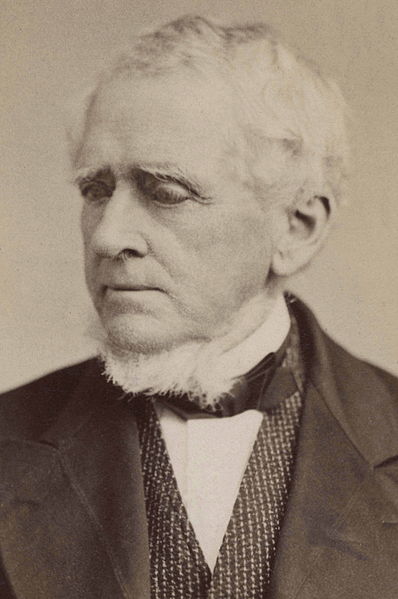
John Adams Dix
24 July 1798 – 21 April 1879
Fort Dix was adjacent to McGuire Air Force Base, which in turn was adjacent to an additional military site, the Lakehurst Naval Air Engineering Station. In 2009, all three were combined to form the Joint Base McGuire-Dix-Lakehurst, or “JB MDL”, as the locals call it.
As previous readers of this blog will remember, I’m quite fond of history and firmly believe that we all have a connection to things of the past.  So it will come as no surprise to hear that I’ll be spending a month at a place where several significant historical events have occurred. Let me just highlight one:
 On 6 May 1937 (75 years to the day before I showed up at Fort Dix), the Luftschiff Zeppelin #129, commonly called the “Hindenburg”, exploded into flames and crashed to the ground, killing 35 of the 97 people onboard.
The Hindenburg, seconds after it exploded into flames.
6 May 1937
The Hindenburg was a large German commercial passenger-carrying airship, also referred to as a “zepplin”—the forerunner of our modern “blimps”. To be precise, blimps are non-rigid (meaning they have no internal framework or support), while the Hindenburg was a rigid airship (built with an internal rigid structure and frame.)
The Hindenburg was a German airship, built in 1936, and could make a trans-Atlantic trip in less than half the time of the standard four- to five-day ocean liner trip. It catered to high-end passengers, and provided a luxurious travel experience. Hindenburg passengers ate gourmet meals off fine china, drank French and German wines and enjoyed live orchestra music during the flight. It was considered the height of luxury, but after the fire, it would become known as the “Titanic of the sky.”

In 1937, the 804-foot-long Hindenburg represented cutting-edge technology, with its fabric-covered, metal frame held aloft by more than 7 million cubic feet of lighter-than-air hydrogen. Flammable hydrogen had to be used because of a U.S. embargo on
nonflammable helium. Many aviation experts considered airships to be the future of air travel.
To keep things in perspective, consider the following size comparison.
Blue Whale: ~100 feet long
Boeing 747: 200 feet long
The Hindenburg: 804 feet long
The Titanic: 882 feet long
The Empire State Building: 1,742 feet long


The Hindenburg flies over NYC in April 1937.

(Like many other things in German society at the time, it was also used as a propaganda tool.  The large “swastika” is clearly evident on many of the historical photographs.)

Before that fateful day in New Jersey, the Hindenburg had carried more than 1,000 passengers on 10 successful round trips between Germany and the US, in addition to trips to Brazil and South America.
The Hindenburg, early evening on 6 May.  Gusty winds and thunderstorms caused the giant airship to circle the field for hours, trying to negotiate a tricky landing.  Note the stormy clouds in the background.
There has never been a definitive answer as to why the Hindenburg exploded into flames.  There are lots of theories, as usual, but most experts believe that the stormy weather that May afternoon somehow ignited a gas leak.  When it burst into flames, the entire ship was destroyed in less than 1 minutes One thing is certain: the explosion brought what is known as the "Golden Age" of airships to a screeching halt.
The smoking remains of the Hindenburg on 7 May 1937.
There's a small memorial on the Lakehurst site where the Hindenburg came to rest.
Sunrise at the Hindenburg Memorial.


The chains and plaque outline the location that the Hindenburg came to rest.

If you have a moment (actually 1:44), check out the historical video below, which includes some incredible video and a firsthand audio account of a reporter on the scene. 

The Crash of the Hindenburg (will open in a new window)

There’s a couple of other important historical things going on around here so stay tuned—I might one day make it to what I’m actually doing here.

Stop One: NMPS

I know these first several posts aren't the most riveting, but since many of you blog readers aren't very familiar with the military, I feel like I need to lay a bit of a foundation before I jump into the heart of what I am doing. So be patient....it will get better.
As I mentioned last time, the first stop for an Individual Augmentee (IA) is one of the Navy Mobilization Processing Sites (NMPS).  There are several located around the country, and I spent a week at the NMPS in San Diego.

A lot happens during the week, but it's all centered around the idea of insuring that an IA is fit for duty, especially in the medical/dental/physical realm.  The last thing the Navy wants is to spend a lot of time and money to send a Sailor around the world, but have that Sailor not be productive because of some health issue.  But if you come to NMPS in good health (as I am), with all your current immunizations (as I did), then it's a lot of down time (which I had).

In addition, you get your first big gear issue.  The military is constantly changing and upgrading the quality of gear it issues, so if you are going somewhere you have never been, or maybe with a Branch of the military you've never worked with before, you'll wind up getting A.LOT.OF.STUFF.

Since I'll be working primarily with the Army, I traded in my Navy uniforms for the new Army Combat Uniform (ACU). Of course, I'll still proudly wear a "U.S. Navy" label across the front.

My first gear issue of this Mobilization.  More gear to follow....

Luckily, I have some good friends in the San Diego area, in addition to Derek Jacobsen, so I had plenty to occupy my time.  I even scored some tickets to a San Diego Padres home game and managed to sit in the "Mayor's Suite".

After a trip to NMPS, the Individual Augmentee usually travels to an additional training site before heading to their ultimate Duty Station. Most Navy servicemembers go to Ft. Jackson (SC) for a 3-week "introductory" training to the Army, but I'm headed to Ft. Dix (NJ) for a 30-day Combat Skills Training course before heading to Afghanistan. The pace is sure to pick up from here on out, and now that we have these introductory blogs out of the way, stay tuned for more excitement.

First things first....

For you late arrivals, here's a brief bit of background to start to answer the question of what I'm doing in Afghanistan. I'll try to provide enough info to paint the picture, but not all the minute details.

As an Active Duty member of the military, a servicemember trains and deploys as part of a larger unit, exactly as I did when I was on Active Duty and deployed with VP-16 in 2006.  Starting 10 or 11 years ago, with the US prosecuting wars in two countries, the military often found themselves with a shortage of people to fill key positions with deployed units.  The result was what is known as an "Individual Augmentee", commonly referred to as an "IA". Quoting from the Navy website, "Individual Augmentees can be used to fill shortages or can be used when an individual with specialized knowledge or skill sets is required. As a result, Individual Augmentees can include members from an entirely different branch of service." Which is, of course, what I'm currently doing.

Servicemembers can come from both the Active Duty and Reserve ranks. In my case, as a Reservist, I was recalled and "mobilized" back on Active Duty for a year.

The first stop for IAs and mobilized Reservists is a Navy Mobilization Processing Site (NMPS), which is where I currently am.  Details on what happens here next time......


The Biggest Change of All

There have been many changes in the last 18 months, none of which were expected or especially welcome at the time. But in the end, the most pressing and real change occurred in early March, when I was recalled to Active Duty in the Navy for 365 days. Of those 12 months, 10 of them will be spent supporting Village Stability Operations (VSO) in Afghanistan. This blog hopes to take you along for the ride.

I'm sure the posts will range across a number of important subjects, answering serious questions about the history & future of Afghanistan, America's foreign involvement AND pressing questions such as "What is a Naval Officer doing in a landlocked country?" and "Why are blankets called 'afghans'?" If you have other crucial questions that need to be answered, feel free to send them my way.


Upcoming Changes

Stay tuned for an exciting new announcement from the creator of Filatore!

March

I’ve delayed posting my project for the month of March, simply because I’m not doing very well.

For the month of March, I decided to become a Good Samaritan. I decided that I would take the initiative and get involved.

I’m sure you know what I mean—every day, we see “things” we could help with. People or events that need our help. The man walking down the road with a gas can in his hand. The old lady trying to load groceries in her car. The person in line in front of us at the grocery store who is $1 short on their bill. It’s embarrassing to admit, but I usually don’t step forward and help out in these situations. I always have some great justification why I can’t get involved: I’m running late, I don’t have any money, I shouldn’t pick up strangers, etc etc—but we all know these are simply excuses. The bottom line is that I’m inherently selfish, and stopping to get involved would probably mess up MY plans for MY day. Subconsciously, I’ve simply decided that “I” am more important than anyone else (and honestly, I don’t like that the fact that I can live with that reality).

Psychologist Rollo May once said, “Hate is not the opposite of love; apathy is.”

This is where it starts to bother me. I’m familiar with the Parable of the Good Samaritan that Jesus told in Luke 10 (if you need a refresher, it’s Luke 10.25-37). And while some scholars claim that this story is an allegory (where the characters symbolically represent other things), I interpret it literally. That we should physically stop, even when it’s inconvenient, even when it’s a stranger and even when it’s people who “aren’t like us”, and get involved. Maybe Jesus meant it as an allegory as well, but I also believe he meant it literally.

14 days into the month, I’m not doing very well. I’ve only had a couple of opportunities---actually, let me rephrase that. I’ve only taken advantage of a couple opportunities thus far, but I’ll try to be more deliberate and intentional in the remaining 17 days of the month.

"The Good Samaritan"; William Hogarth (1736)


"The Good Samaritan"; Jan Wijnants (1670)


"The Good Samaritan"; Jose Tapiro y Buro (date unknown)


"The Good Samaritan"; Pietro Benvenuti (late 1700's)


"The Good Samaritan"; unknown artist & date


"The Good Samaritan"; Rembrandt (1630)


"The Good Samaritan"; Aime Morot (1880)


"The Good Samaritan"; Rembrandt (1638)


"The Good Samaritan"; Fetti Domenicol(date unknown)


"The Good Samaritan"; stained glass in the Church of St Eutrope; Clermont-Ferrand, France

The Amish; Part III

Here is a collection of Question & Answers sent in by the curious public.

Q: Does the term “Rumspringa” have anything to do with the hip-hop song “rumpshaker”?
To the best of my knowledge, the term (discusssed previously in "Part II") has nothing to do with the 2003 album “Rump Shaker” by Suburban Legends, or the 1992 rap single by Wrecjx-n-Effect.


Q: Have the Amish ever produced championship cyclists?
I do not believe that the Amish have ever produced any championship cyclists, but there was at least one from a Mennonite background. America Floyd Landis grew up in a devout Mennonite family in Pennsylvania before he got into cycling (true story: Landis showed up at his first bike race wearing sweat pants, since shorts were frowned upon by Mennonites). Landis went on to success as a professional bike racer, and gained more fame when his 2006 Tour de France victory was revoked upon testing positive for enhanced testosterone levels. I suspect he might also be one of the few Mennonites to ever be banned from international sports due to performance enhancing drugs.


Floyd Landis, in happier times.


Q: Why did the Amish name the town Intercourse?
Intercourse, Pennsylvania was founded in 1754, and was originally named Cross Keys, after a local tavern. The name was changed to “Intercourse” in 1814.
According to the town’s website, several theories are given for the origin of the name, “Another theory concerns two famous roads that crossed here. The Old King's Highway from Philadelphia to Pittsburgh (now the Old Philadelphia Pike) ran east and west through the center of the town and intersected the road from Wilmington to Erie. The joining of these two roads is claimed by some to be the basis for the town 'Cross Keys' or eventually 'Intercourse'. A final idea comes from the use of language during the early days of the Village. The word 'intercourse' was commonly used to describe the 'fellowship' and 'social interaction and support' shared in the community of faith, which was much a part of a rural village like this one.”
According to my mother, who clearly explained the meaning of Intercourse to me at the tender age of 39: It’s a farming community and the roads lead into town to the market. The more direct route was called the Inter-course ( or Business route) the other being the long way around, or Outer-course.


Q: Is Weird Al Yanovic Amish?
No. Weird Al (famous for such parody songs as “Eat It” and “I Love Rocky Road") was born in California of Yugoslavian descent. He did record a single in 1996 entitled “Amish Paradise”, but he is not Amish.


Weird Al (no more glasses--he got LASIK!


Q: Why don’t they have curtains?
Actually, they do use curtains. As mentioned previously, some of the lifestyle choices chosen by the Amish vary from community to community. While some communities choose not to use curtains (my guess is they perceive is as being too “fancy”—remember that the simple, unadorned life is highly sought after), others use curtains and all are the same color, shape, etc. This would be in keeping with their desire not to draw attention to themselves.

The Amish; Part II

Questions and Answers in my month long study of the Amish.

Q: What do the Amish believe?
The Amish are a Christian community. They believe in all the tenets of Christianity, and their differences primarily come from their strict interpretation of the Bible in terms of worship (corporate & individual), dress, language and non-violence & pacifism. Many modern Christians read Biblical passages and interpret them as a cultural requirement of the day (for example, consider the teaching in Exodus 20.4 : “Thou shalt not make unto thee any graven image, or any likeness of anything that is in heaven above, or that is in the earth beneath, or that is in the water under the earth…”). Many modern scholars consider that to be a cultural issue for the OT church, but the Amish take that very seriously and forbid the use of photographs, which would constitute a graven image,

One overarching idea that guides much of the Amish life is the idea of “conforming” to the world. In Romans 12:2, it is written, “Be not conformed to this world, but be transformed by the renewing of your mind that ye may prove what is that good and acceptable and perfect will of God.” The Amish take this very literally, and consider the use of “modern” things (such as electricity, telephones, cars, tractors, etc) to be conforming. While travelling through Amish country, you can almost always identify an Amish home from the lack of electric wires, satellite dishes, and phone lines on their houses.

Here’s an important thing to remember: the Amish voluntarily choose to separate themselves from the world. They don’t consider it a necessary means to salvation, but a way of separating themselves from the modern (read: sinful & corrupt) world. If some situation dictates that an Amish person needs to use a phone, or travel some distance in a car, they can and often will. But the use of a phone would be a utilitarian choice (for example, the need to call a doctor) versus using the phone to socialize with a friend. The Amish belief not to use electricity isn’t a belief that electricity is evil, but because it could lead to temptations and the deterioration of church and family life.
Most of us today would think it impossible to live without the modern conveniences such as electricity and cars. What makes the Amish unique is not that they get along without modernity, but that they choose to do without it when it would be readily available. The Amish value simplicity and self-denial over comfort, convenience and leisure. Their lifestyle is a deliberate way of separating from the world and maintaining self-sufficiency. As a result there is a bonding that unites the Amish community and protects it from outside influences such as television and radios.

Q: Why the funky beards (and no mustaches)?
This is a good example of a cultural practice adopted by most Amish. The Amish believe that a beard is a symbol of wisdom and maturity and at some long forgotten moment in history, they decided that after an Amish man gets married, he would no longer shave his beard (obviously, marriage is the moment when a man gets wise and becomes mature). The mustache issue is a little cloudier. According to multiple sources, a mustache (in the 1700 & 1800’s) was primarily worn by people in the military (someone just reminded me that George Washington didn’t have a mustache!), so the Amish adopted a “no-stache” rule. I guess we know where that puts Tom Selleck.


It’s worth noting that some of these cultural requirements vary from community to community. For example, there are some Amish communities that allow a young man to grow a beard after he has been baptized, regardless of his marital status.


Q: Is it true that teenagers have a period of time when they can “sow their wild oats”?
The period is referred to as “Rumspringa” (also seen as Rumschpringe or Rumshpringa, derived from the Pennsylvania German term) and loosely is defined as "running around". This period loosely correlates with what most American’s would term “adolescence”. It begins around age 16, lasts for a few years, and culminates with the Amish youth either choosing to be baptized and become a full member of the community or leave the Amish community for life in the modern world. Not all Amish communities use this term, and within the Amish population, it is commonly a time for courting and finding a spouse. Modern society tends to paint a picture of a rebellious youth, engaged in all sorts of lewd behavior (and to be fair, that may happen on occasion), but the reality is much tamer.

The Amish; Part 1

To thoroughly understand the origins of the Amish, we have to go back to 16th Century Europe. (I’ll try to simplify this argument for the sake of clarity). At that time, some in the church began the movement known as the Protestant Reformation, primarily a broad reaction to the theology and practices of the Roman Catholic Church. A key teaching in the Roman Catholic church was that baptism was necessary for salvation, and since it was necessary, it should be done as soon as possible. Thus, the practice of infant baptism arose during this time. In contrast, the group of “Reformers” affirmed that baptism should not occur until a believer was old enough to know and understand the tenets of salvation through Jesus Christ. This group became known as the “Anabaptists”, or “re-baptizers”.

Anabaptist were outspoken against many things they believed to be theologically incorrect, among them infant baptism, the taking of oaths, wedding rings, endorsement of any type of violence in society (including membership in the military or police force) and participation in civil government or even secular society.

An early leader in the Anabaptist movement was Menno Simons, a Catholic priest who struggled with his Catholic faith (interesting note: in 1526, Simmons began an exhaustive study of the Scripture to try and understand the Catholic doctrine of “transubstantiation”. He admitted that prior to this time, even as a priest, he had never really studied the Scripture). In 1536, Simons left the church and fully adopted the Anabaptist movement; his followers became known as Mennonites.


Menno Simons; (1496-1591)


In 1693 Jacob Amman led an effort to reform the Mennonite church. When his efforts at reform fell through, Jacob and his followers split from the other Mennonite congregations and became known as the Amish Mennonites (based upon his name, Amman).

Mennonites and Amish suffered terrible persecution in Europe through the 1500 & 1600’s, with many fleeing to the mountains of Switzerland and southern Germany. It was here that the strong farming tradition and home worship services began to form (as ways to avoid persecution from society).

The Amish name derives from the founder (Jacob Amman), similar to the way “Lutheran” derived from Martin Luther or “Wesleyan” comes from John Wesley.


Jacob Amman; (1656-1730)


Q: How did they get to the United States?

In 1682, James Duke of York , the future James II of England, handed over a large piece of his American holdings to William Penn. Penn believed strongly in religious freedom (due in large part to being persecuted for his Quaker beliefs) and insisted that his land (which would later become Pennsylvania and Delaware) be a haven for the religiously persecuted. As such, he promoted his new colony in the Americas heavily throughout the Mennonite and Amish communities, and the first Anabaptists came to Pennsylvania as early as the mid-1700’s. Tens of thousands of Mennonite and Amish families (some say in excess of 100,000+) came to the United States in the 1700 & 1800s, settling primarily in Pennsylvania, but also other states in and around the area.

February

A new month is here, and with it, a new challenge. Lots of people have been suggesting food-related tasks, but I’m on the road for much of this month, and I was looking for something a little more cerebral.

My idea occurred on the last day of January. I found myself in western Pennsylvania trying to pass a horse-drawn Amish buggy on a narrow road. I started thinking about the Amish people, and realized that I don’t really know much about them. So my task for the month of February is pretty simple—I’m going to learn everything I can about the Amish. Where they came from, where they live, what they believe. . .in addition, I’ll answer some of the most common questions, including:
1. Why do they paint their doors blue?
2. What’s up with those funky beards the men wear?
3. Did they have anything to do with the naming of Intercourse, Pennsylvania?


If you have any questions about the Amish community, feel free to send them my way and we’ll get to the bottom of this subject.

January:


I’m a touch late posting this, but for the month of January, I’ve given up two things: Partially Hydrogenated Oils (PHOs) and High-Fructose Corn Syrup (HFCS). Here’s why (and I'll try to take out all the complex chemistry and make this super-simple):

Partially Hydrogenated Oils (PHOs) are formed by passing hydrogen- through liquid oil. By “partially hydrogenating”, the oil develops into a butter-like consistency—but at a fraction of the cost of real butter. It’s gives food a richer texture, but very cheaply. It also serves as a preservative; have you ever wondered why some processed foods (especially things like Twinkies and those delicious little white powdered donuts) can stay fresh forever? It’s because they are loaded with PHOs. Food producers get a double dose from PHOs: food is cheaper to make, and it can stay on the shelf longer, both of which add up to more money for the producer.

PHOs have been linked to increases in multiple types of cardiac disease, diabetes, obesity, and a myriad of other health problems. There’s no good reason why you should eat anything made with PHOs, but the reality is that they are everywhere—a huge majority of breads, cakes, pies, crackers, soups, and cereals are loaded with PHOs.


High Fructose Corn Syrup (HFCS) is a little trickier. Here’s what happens to your body when you consume “normal” sugar. Your body produces insulin, and a side-effect of insulin production is appetite suppressant (technically a chemical called “leptin”). In other words, when you eat something sugary, you “feel” full and you eat less. This is where HFCS comes in. Since HFCS isn’t sugar, there’s no insulin production—and as a result, there’s no natural appetite suppressant. So why do candy and food makers use HFCS? It’s simple---so your appetite will not be suppressed and you’ll eat more (translation: you will buy more). An added economic bonus is that HFCS is cheaper than sugar, so producers save on the initial food production.

HFCS has been tentatively linked to the rise of obesity in the United States (especially childhood obesity), poor dental hygiene, and a list of other health problems. In the 40 years since the introduction of HFCS into the American diet, rates of obesity in the U.S. have skyrocketed (In 2010, roughly one-third of the American adults are considered obese). It certainly isn’t fair or accurate to place all of the blame at the feet of HFCS, but that certainly is a factor.

When you start reading labels, you’ll find HFCS in lots of things you would expect (candy, ice cream, sodas, fruit drinks, condiments) and some things you wouldn’t expect (bread, yogurt, and even some lunch meat!)

Both of these are small ingredients that are easily lost in the list of other ingredients. But they can have a lasting impact upon all of us, and I’ve decided to begin this year by cutting out all foods made with those ingredients. Stay tuned for an update.

A Year of Months

Many of you know that for many years, I have chosen a year-long project for the New Year. From the mundane to the exotic, I have met with varying degrees of success (a pic every day of 2007) and failure (a ban on ice cream back in 2004.) For 2011, I’ve decided that rather than having one project for the year, I’m going to have 12 different projects, one for each month of the year.

It might be something culinary (vegetarian for a month), social (being a spontaneous extrovert) or something in the community (volunteering with a local organization). Stay tuned for January’s quest.

April 24: Birthdays

We know several people who share today as a birthday: Darren Gadd in NC & his nephew, Elijah Rector, Aja McVaney in TX, and Kelli Ramsay in WV at the moment but from San Clemente, CA. Happy Birthday from coast to coast!


April 21: Spring Snow in Bass Lake again

April 17: Mighty San Joaquin River

We floated the San Joaquin with friends, Jamie and John. What a great afternoon!

April 15: Jim aka "Gym" Smith's birthday among other things

April 12: Orange County, CA

A teen girl band plays at the OC Youth Expo and it reminded us of our friend, Jess Richmond, a teen band member back in her younger days. We love her song "flexible fabric, bandaid!" and wish we could have seen her on stage too.

April 10: Lao in SoCal

Our waitress, Buffy, in Pasadena speaks both Lao and Thai. I can't remember which one she said that she finally spoke in the video but I believe it is Lao. She was a great sport. Filatore asked for water in a clean glass (emphasis on "clean") because Ginger had asked for water with "no ice". We cracked up when she brought glasses of water and the one she gave to Filatore had lipstick on it! She blushed but laughed right along with us.
She forgot to say hi to all of you out in blog world but we didn't have the heart to ask her to do a 2nd take. Speaking of "take 2", there are several previous videos that have mistakes and one of these days we'll post an outtake reel.

April 9: Newport Beach overlooking Balboa Island

Bill and Chris Welch are old friends from our first go-round in Oakhurst. They now live in Huntington Beach and we miss not having them in Oakhurst. We enjoyed a fantastic dinner sitting upstairs and outside over looking the bay. Bill was our pastor and one of our funniest memories PN (pre-Navy) includes him. I will not throw him under the bus right away but maybe we will share the parfait story one day (if this generates at least 10 comments).
Also, Filatore would like to publicly apologize for attempting to disengage Bill's watch alarm at 9pm only to learn that it now goes off at 9:05, 9:10, 9:15, 9:20, 9:25, 9:30 and 9:35!

April 8: Pasadena, CA

We stopped to have dinner with Mel, an old housemate and co-worker and a really good friend. We really love Mel but we have to throw her under the bus for getting the date wrong. Way to go Mel.

Before dinner we stopped in to meet Mel at her place of work, a local coffee shop attached to the Pasadena Library. After dinner there was a little detective work by Filatore.