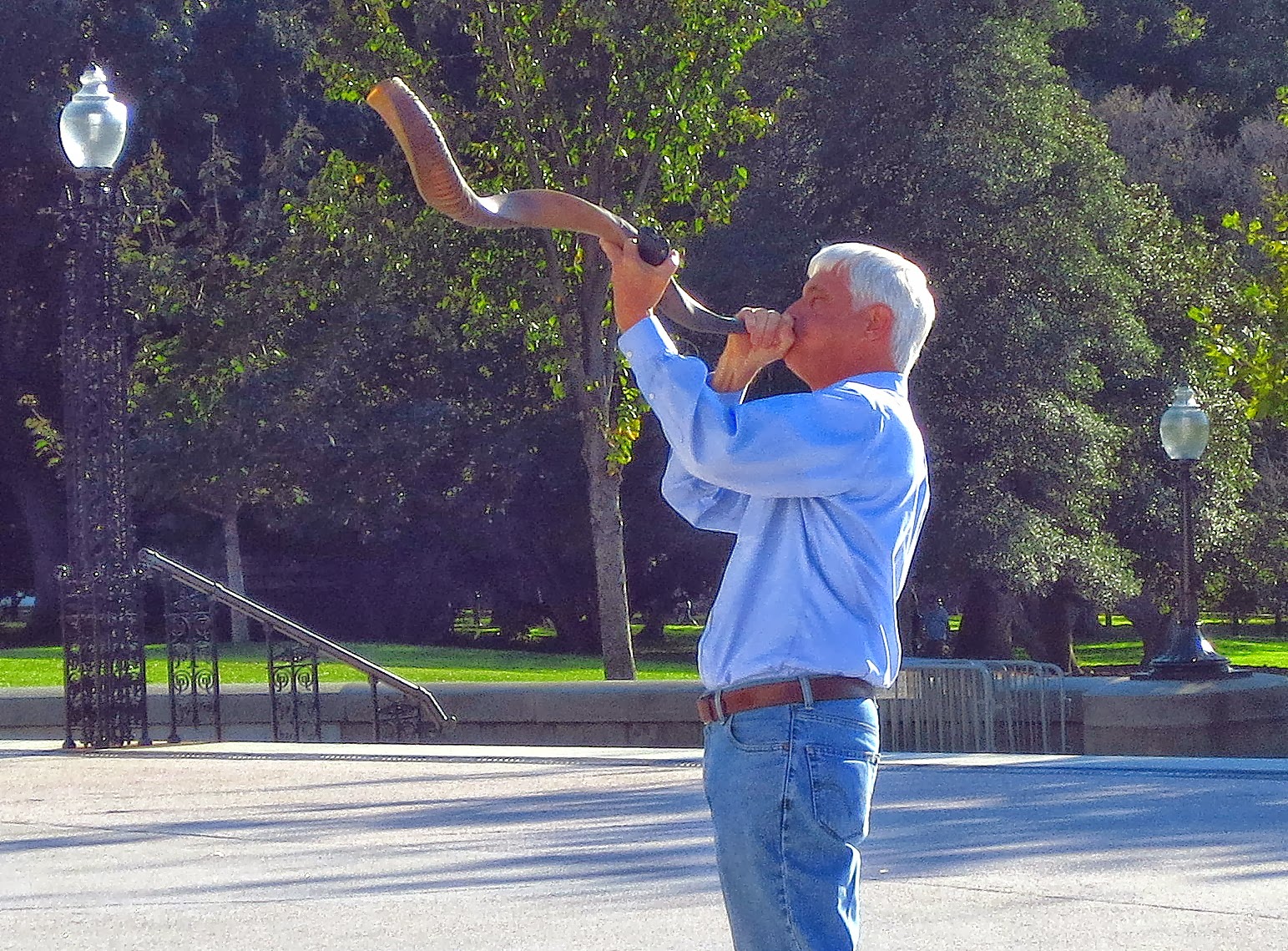
Change


This entry marks a significant transition to this blog, which was originally started while I was deployed to Italy (in case you didn't know.."Filatore" is "Spinner" in Italian; at least in my vocabulary.) and later morphed to highlight a major project (The "Picture A Day" project in 2007) I was involved in. When we moved to DC, it changed again to serve as a great avenue to indulge my interest in history and local attractions.

I've attempted to highlight some of the most significant, yet also entertaining, sites in the DC area, but I feel like I barely touched the surface. I've run out of time, and never got to tell the story of the Pope's contribution to the Washington Monument (it ended up in the Potomac River), or the man who built Haines Point, or the Congressional Cemetery, or a dozen other stories on my list. You'll just have to discover those for yourself.

As many of you know, this month also marks a transition for Ginger & me. My last day in the office in 2 October (tomorrow!), and I officially separate from the Navy at the end of November. It's been an interesting 5+ years--not what we expected, but then again, life rarely is. It's involved travel to areas far and wide, involvement in some of the most relevant issues of our day, periods of separation, new relationships, and times of hardship and struggle. It hasn't always been fun, or easy, or exciting, but we've gotten through with the love and support of many friends and family, of which we are eternally grateful.

I can summarize my time in the Navy by quoting John F. Kennedy, our 35th President, who said: "Any man who may be asked in this century, what he did to make his life worthwhile, can respond with a good deal of pride and satisfaction, "I served in the United States Navy".


We're taking a month off and plan to travel during the month of October--we'll be in Switzerland (and maybe Austria/Italy as well) for much of that time. In November, I'll start work as the Operations Director at Summit Adventure, and we'll go about the business of establishing our life back in the beautiful Oakhurst/Bass Lake area.

This blog will continue, but will probably transition to highlight more of our personal life and adventures in the future. Stay tuned for more details, and when you come to visit, maybe you'll have your Internet 15 minutes of fame!

Thanks for reading, and sharing. We look forward to good times in the future.

August: The Case of the Missing Firehorse

I strongly believe that the best history stories are like a good work of fiction-interesting, suspenseful, and engaging to both your intellect and your emotions. And if it involves a person, place or subject that you know and care about--even better. Here's a little nugget I came across that fits most, if not all, of those criteria.

On 25 June 25, 1937, a small contingent of firemen, animal lovers, involved citizens and ordinary town folks gathered on a gentle rise near the southernmost tip of the District of Columbia. They were there to pay their last respects to a fallen firefighter, although this one had four legs. A large monument of Indiana limestone was hoisted into place over a grave, its surface engraved with "In Memory of Tom, Last Horse in the D.C.F.D.". Who was Tom? What happened to him? Why was he buried out there? More importantly, where is that grave now?

Once upon a time, before the invention of fire trucks and modern equipment, fire crews and wagons were pulled by firehorses. They had to be strong, and fast, and not easily spooked by the chaos and confusion of a fire scene. Much time and expense was incurred selecting a fire ser­vice horse. It was said that the animal that could fill the role of a fire service horse was a one-in-a-hundred selection. A firehorse represented a considerable investment in training time and money. The training of a firehorse took between, on average, one and two years, and some cities even had "horse colleges" where firehorses were trained.


Except when it was eating, a firehorse lived with a bit in its mouth. It had to be ready to go at all times. In those days, a fire alarm rang in every station simultaneously, but the specific pattern of bells indicated which station was to respond. A good firehorse could discern when its services were needed, and many would start kicking the stalls the moment they heard their unique call. Once harnessed, the three-horse team would burst from the station, ears back, nostrils gaping, muscles pumping. I'm sure there were few sights more stirring, or comforting (if it was your house burning), as a team of strong firehorses rounding a curve at full clip.

Fire Company 205 answers an alarm in Brooklyn (NY) on 20 Dec 1922 (all other photos in DC)


These horses were meticulously cared for and teams were matched in size, color and general appearance when possible. These animals became local celebrities with residents, especially children, who often brought their favorite firehorse treats, such as sugar cubes or apples, during the horse's daily exercise jaunt.


In the late 1800's, as many as 200 firehorses worked for the DC Fire Department, and every fire station included a stable and manure pit.


But progress waits for neither man nor beast. The D.C. fire department got its first motorcar in 1910. A year later, Engine Co. 24 opened on Georgia Avenue with a motorized pumper. It was also the first station built without a stable or manure pit. The horse era was ending.


In 1925, the last horse team -- Barney, Gene and Tom -- made a final ceremonial run. (It was captured on film and several pictures can be seen below.)


Barney, Gene and Tom on the final run


Out of the way chickens!


Some firehorses, when no longer needed, were transferred to the street cleaning department or sold to merchants who used them to haul goods, but firehorses were ill-suited for other kinds of work. They were trained to run, and react, and didn't like to stand on the sidelines. Many times, instinct would take over when they heard an alarm and they would tear off down the street. The lucky ones were put out to pasture at Blue Plains. (At the time, Blue Plains was a rural enclave that included an old folks' home, a paupers' burial ground and fields that ran down to the Potomac and Oxen Cove. It's on the east side of DC just across the Anacostia River.) Barney and Gene died at Blue Plains in 1932, but Tom lived for a few more years, appearing in Labor Day parades and, if the old stories are to be believed, cocking his head at the smell of smoke, wanting to get in on the action.


How Tom died is somewhat of a mystery. Firehouse legend has it that in June of 1937, Engine #25 was responding to a fire and travelling down Overlook Parkway (what would later become I-295). That section of road ran parallel the fence and pasture where Old Tom was enjoying his retirement. Tom, hearing the bells and seeing the hoses and fireman (his people!) and not quite knowing (or liking) the concept of retirement, went into action. In a heartbeat. Tom was running next to the road, stride for stride with the motorized truck as it sped down the road. Later that day, workers found Tom dead, his heart no longer up to the task of responding to his last alarm. It should be noted that this has not be verified, but it makes a good story.

Regardless of how he died, he was buried on that warm summer day in 1937. The 26 Jun edition of the Washington Post provides the details: Miss Virginia W. Sargent, president of the city's Animal Protective Association, was the principal speaker. Her group had spearheaded the effort to remember Tom. She lauded the horse's gentleness, courage and loyalty. Capt. Raymond E. Oden of Firehouse #25 praised Tom's long service. Private E. M. King sounded a final tribute: 27 notes on a fire engine gong, one for each year of Tom's life. Pictures of the event show schoolkids lined up around the new memorial stone.


Tragically, his monument was lost over the years. Somehow, no one knows, or remembers, where the monument was placed. Maybe it was moved in a bit of construction. (Ironically enough, much of the old Blue Plains retirement home was turned into the DC Fire Academy). Maybe someone found the monument and took it home. Maybe it is still there, grown over by brush and weeds, waiting to be discovered. . .

31 Days of History Conclusion

For each of the last 31 days, I've highlighted some historical person, place or thing that has a local connection to the DC area. In closing this month long experiment, there are a couple of points I'd like to make.

First, history is not just some isolated, one-time event that happened a long time ago. I firmly believe that who we are is a result of all the things that have come before us--personal decisions by our family and ancestors, political decisions from national leaders, environmental events, etc etc. Obviously, there is a large degree of personal initiative, but we are heavily influenced by what has come before. When
I read history, recent or ancient, local or distant, I always look for the personal connection. If you dig deep enough, it's always there.

Second, people have told me that it's easy to find history since we live in DC, but not so easy elsewhere. I'd have to disagree---there are connections to the past everywhere, but we tend to overlook them when it's in our own backyard. Look around your area--are the streets or neighborhoods named after certain people or places? When was the city started? Famous people from your area? How does your city/state/area fit into the larger scale of American history? Trust me--we are all connected somehow, it's just that sometimes those connections are harder to see.

Third, I'm glad the month is up. I need to break from blogging.

31 Days of History: 31 July

In 1990, Governor of Hawaii John Waihee proclaimed 31 July to be Ka Hae Hawaiʻi Day, or the Hawaiian Flag Day. It has been celebrated each year since then on this day.


Hawaii, the 50th state to be accepted into the Union on 21 August 1950, has a unique flag. It’s the only flag that has flown over a kingdom, a protectorate, a republic, a territory, and a state. It is also the only flag that incorporates the British Union Jack as part of its design—the Union Jack is a holdover of the period in Hawaiian history when it was a British protectorate (1794–1843).

The field of the flag is composed of nine horizontal stripes symbolizing the nine major islands that compose Hawaii (Hawaiʻi, Oʻahu, Kauaʻi, Kahoʻolawe, Lānaʻi, Maui, Molokaʻi, Niʻihau and Nihoa).

There are various accounts of the how the flag came into the current design. The most commonly accepted version relates how King Kamehameha I flew a British flag, given to him by British explorer Captain George Vancouver, as a token of friendship with King George III. Kamehameha would often fly the flag from places of honor until one of his advisors noted that the British Flag could draw Hawaii into international conflict as his kingdom could be seen as an ally of the United Kingdom. During and after the War of 1812, a flag of the United States was raised over Kamehameha's home, but British officials objected to this as well. To placate the two nations, Kamehameha combined the two into a new creation.

King Kamehameha


(A brief bit of background: Kamehameha (1738-1819), also known as Kamehameha the Great, conquered the Hawaiian Islands and formally established the Kingdom of Hawaiʻi in 1810. He was the first ruler to bring all the Hawaiian islands under central rule. His full name was Kalani Paiʻea Wohi o Kaleikini Kealiʻikui Kamehameha o ʻIolani i Kaiwikapu kaui Ka Liholiho Kūnuiākea).

King Kamehameha's statue in the Capitol Visitors Center


The DC connection: In the United States Capitol, you can find the National Statuary Hall Collection. Congress has invited each state to select and make two statues of famous, noted individuals from each state and send them to the Capitol. With the addition of New Mexico's second statue in 2005, there are 100 statues scattered throughout the Capitol. (For example, you can find John C. Calhoun and Wade Hampton from South Carolina.) One of Hawaii’s statues is King Kamehameha, and it is the largest statue in the collection, weighing more than 6 tons. You can find it in the New Capitol Visitors Center.

Hawaii's other statue, Father Damien


So if you have a Hawaiian flag, today is the day to fly it proudly!


You can find 50 statues here.

31 Days of History: 30 July

On this day in 1956, President Dwight D. Eisenhower signed a law officially declaring "In God We Trust" to be the nation's official motto (there was no national motto prior). The law, P.L. 84-140, also mandated that the phrase be printed on all American paper currency. The phrase had been placed on U.S. coins since the Civil War and the Secretary of the Treasury, George Humphrey, suggested adding the phrase to paper currency as well.


This occurred two years after Eisenhower amended the Pledge of Allegiance to include the phrase "under God".


Of note, one possible origin of the phrase "In God We Trust" comes from Francis Scott Key, the man who wrote the poem that would become the National Anthem. Written in 1814, the final stanza contains the phrase:"...And this be our motto: 'In God is our trust'."

The arguments supporting and opposing the phrase are varied. Consider the following:

President Eisenhower wrote, "In this way we are reaffirming the transcendence of religious faith in America's heritage and future. . ."

The 84th United States Congress had required that the words appear on all currency, as a Cold War measure; a sort of religious safety valve. "It is proper to remind all of us of this self-evident truth--that as long as this country trusts in God, it will prevail."

President Theodore Roosevelt took issue with placing the motto on coinage as he considered it sacrilegious to put the name of God on money. Roosevelt wrote, "it seems to me eminently unwise to cheapen such a motto by use on coins, just as it would be to cheapen it by use on postage stamps, or in advertisements."


The "Establishment Clause of the First Amendment" states that Congress shall make no law respecting an establishment of religion. Critics contend that the motto's placement on money constitutes the "establishment" of a religion by the government. However, the Supreme Court has upheld the motto because it has "lost through rote repetition any significant religious content".


The first paper money with the phrase "In God We Trust" was not printed until 1957.

The argument over the appropriateness of that motto has been raging ever since.

31 Days of History: 29 July

On this day, 29 July 1862 (147 years ago) Confederate spy Marie Isabella "Belle" Boyd is arrested by Union troops and detained at the Old Capitol Prison in Washington, D.C. It was the first of three arrests for this skilled spy who provided crucial information to the Confederates during the war. Throughout the War, she became known as the “Cleopatra of the Secession”.

Belle Boyd


Belle Boyd was just 17 when the war began. She was from a prominent slaveholding family in Martinsburg, Virginia (now West Virginia), in the Shenandoah Valley. On 4 July 1861, a band of Union army soldiers broke into her home, intent on raising the U.S. flag over the house. When one of them pushed her mother, Belle drew a pistol and killed him. A board of inquiry exonerated her, but sentries were posted around the house and officers kept close track of her activities. She profited from this enforced familiarity, charming at least one of the officers into revealing military secrets. "To him," she wrote later, "I am indebted for some very remarkable effusions, some withered flowers, and a great deal of important information." Belle conveyed those secrets to Confederate officers via her slave, Eliza Hopewell, who carried the messages in a hollowed-out watch case.

After the shooting incident, Boyd realized she could use her “natural gifts” to further the Confederacy. She used her “charms” to engage Union soldiers and officers in conversations and acquire information about Federal military affairs (Historical documents of the day claim she was not blessed with a pretty face, but she was particularly noted for having the best looking ankles around!). As one record states, “She looked at men through her long lashes, assuring them that she had no intentions hostile to the North, while she stole whatever secrets were at hand and filched others practically from their pockets.” Suspecting her of spying, Union officers banished Boyd further south in the Shenandoah, to Front Royal Virginia, in March 1862.


One evening in mid-May 1862, Union General James Shields and his staff gathered in the parlor of the local hotel. Belle hid upstairs, eavesdropping through a knothole in the floor. She learned that Shields had been ordered east from Front Royal, Virginia, a move that would reduce the Union Army's strength at Front Royal. That night, Belle rode through Union lines, using false papers to bluff her way past the sentries, and reported the news to Col. Turner Ashby, who was scouting for the Confederates. When the Confederates advanced on Front Royal on 23 May, Belle ran to greet General Stonewall Jackson's men. She urged an officer to inform Jackson that, "the Yankee force is very small. Tell him to charge right down and he will catch them all." Jackson did and the Union soldiers were routed and thoroughly defeated. That evening, Gen Jackson penned a note of gratitude to her: "I thank you, for myself and for the army, for the immense service that you have rendered your country today." For her contributions, Boyd was awarded the Southern Cross of Honor. (It should be noted that Virginia Code section 18.2-176(b) still remains in effect-making it a Class 3 misdemeanor, punishable by a fine of not more than $500, to "wear any Southern Cross of Honor when not entitled to do so by the regulations under which such Crosses of Honor are given.")

The Southern Cross of Honor


Before she reached twenty-one, Boyd had been imprisoned twice, "reported" nearly thirty times, and arrested six or seven. After her lover (read: source) gave her up, Belle Boyd was arrested on 29 July 1862, and brought to the Old Capitol Prison in Washington. Her incarceration was evidently of limited hardship, as she was given many special considerations, and even she became engaged to a fellow prisoner! Upon her release one month later, she was shipped under a flag of truce to Richmond.


(Historical detour: The Old Capitol Prison was a former boarding house which was turned into a prison during the Civil War. John C. Calhoun, South Carolina politician, former Vice President of the US and one of the leading advocates of slavery and states’ rights died of tuberculosis in the boarding house in May 1850. It was demolished in 1929 and the US Supreme Court was built on the property.)

The Old Capitol Prison and John C. Calhoun


After a second imprisonment, Boyd became a courier of secret messages to Great Britain (the Confederacy was seeking recognition from European countries. In 1864, her ship was captured off the coast of North Carolina, and the ship and crew were taken to New York. Captain Samuel Hardinge, of the USS Connecticut, took command of Boyd's vessel, but when the ship made port in NYC, he was seen dining and shopping with Belle Boyd, his “prisoner”. He followed her to London, and they were married soon after. (There is some evidence that he was relieved from naval service as a result of his conduct with Belle Boyd.)

Boyd was widowed soon after the end of the war, but the union produced one child. Still just 21, Boyd parlayed her spying experiences into a book and an acting career, and was perhaps telling the truth when she wrote, “"A true woman always loves a real soldier.". She died in Wisconsin (!) in 1900.

Belle Boyd's book, published in 1865


To read a detailed account of Belle Boyd’s activities, click here:

31 Days of History: 28 July

On this day in 1868, the 14th Amendment to the Constitution of the United States is passed, establishing African-American citizenship and guaranteeing due process of law.


As a brief reminder, the Constitution is the supreme law of the United States. It is the foundation and source of the legal authority underlying the existence of the US and it provides the framework for the three main branches of the government: executive, legislative and judicial.

The Constitution was adopted on 17 September 1787, by the Constitutional Convention (or Constitutional Congress]) in Philadelphia and later ratified by conventions in each state. It has been amended (or modified) twenty-seven times. As mentioned earlier, the handwritten original document is on display at the National Archives.

The 14th Amendment, along with the 13th and 15th, are called the “Reconstruction Amendments”, as they were adopted during the period of Reconstruction after the Civil War.

The 14th Amendment represented a significant reversal of the Dred Scott decision (Dred Scott v. Sanford; 1857) which ruled that black people (more specifically, people of African descent imported into the United States and held as slaves, or their descendants) were not and could not become citizens of the United States, were not protected by the Constitution, nor could they enjoy any of the privileges and immunities of citizenship. Dred Scott also established the slaves were private property of the slave owner.


FYI: The 13th Amendment officially abolished and continues to prohibit slavery and indentured servanthood, while the 15th Amendment prohibits each government in the United States from denying a citizen the right to vote based on that citizen's "race, color, or previous condition of servitude" (i.e., slavery).”

31 Days of History: 27 July

On this day in 1909, exactly 100 years ago today, 1909 - Orville Wright set a record for the longest airplane flight. He was testing the first Army airplane and kept it in the air for 1 hour 12 minutes and 40 seconds—this flight took place at Ft Myers, just across the Potomac River from Washington, DC.

I’ve written about Ft Myer (here and here) in the past—it’s where we stayed for 10 days when we first moved to town and were looking for a place to live. It’s an exceedingly small but exceedingly immaculate base—due primarily to its location (immediately adjacent to Arlington National Cemetery), it’s occupants (the Joint Chiefs of Staff and much of the higher Army brass live here) and place in US history.

The Wright brothers, Orville and Wilbur, were two brothers who are generally credited with inventing and building the world's first successful airplane and making the first controlled, powered and sustained flight on 17 December 1903. Although not the first to build and fly experimental aircraft, the Wright brothers were the first to invent aircraft controls that made fixed wing flight possible

Orville (left) and Wilbur (right) Wright


After the successful flight of the “Wright Flyer I” at Kill Devil Hill in Kitty Hawk, NC, the Wright brothers continued to refine their technology and applied for a US Patent in 1906 for a "Flying Machine". As mentioned in the post on 25 July, patent applications required demonstrations.

The Wright Flyer I takes flight at Kitty Hawk


Orville demonstrated their invention to the United States Army at Fort Myer, Virginia, on 3 September 1908. It was so successful that on 17 September, Orville had another flight and took Army Lt. Thomas Selfridge along as his passenger, serving as an official observer. Unfortunately, a few minutes into the flight at an altitude of about 100 feet, a propeller split and shattered, sending the aircraft out of control and crashing to the ground. Selfridge suffered a fractured skull in the crash and died that evening in the nearby Army hospital, becoming the first fatality of an airplane crash. Orville was badly injured, suffering a broken left leg and four broken ribs. Seven weeks of hospital rehabilitation followed.

After the crash. . .


Lt. Thomas Selfridge


If you’d like to read the description of the event from the New York Times, click here:

A final flight followed in July 1909 which satisfied the demands of the Patent Office and US Army. They sold the aircraft to the Army's Signal Corps for $30,000.

It should be noted that on 25 May 1910, Orville & Wilbur took a 6 minute flight together, the time the Wright brothers ever flew together. They had promised their father they would never fly together to avoid the chance of a double tragedy. After that flight, Orville took his 82-year old father (Milton) on a nearly seven-minute flight, the first and only one of his life. The airplane rose to about 350 feet while the elderly Wright called to his son, "Higher, Orville, higher!"

31 Days of History: 26 July

Charles E. Bolles was an English-born immigrant who settled in New York when his family came to the United States in 1831. In late 1849, Bolles and his cousin took part in the California Gold Rush, eventually ending up on the North Fork of the American River in northern California. After an unsuccessful attempt at mining gold, Bolles returned east where he met and married Mary Elizabeth Johnson in 1854. By 1860, the couple had made their home in Decatur, Illinois.

Charles E. Bolles


On 13 August 1862, Bolles enlisted as a private in Company B, 116th Illinois Regiment. He was an adequate soldier, taking part in numerous battles and campaigns and was discharged on 7 June 1865 in Washington, D.C. (there’s your only connection to DC for today). He returned home to his wife in Illinois, but the quiet life of farming held little appeal to him. Two years later, he had left to prospect for gold in Idaho and Montana, promising to write to his wife when he “struck it rich”. In an August 1871 letter to his wife he mentioned an unpleasant incident with the Wells Fargo Bank and vowed to “pay them back”. That was his last letter; he stopped writing and never made contact again with his wife. She could only assume he was dead.

Time moves on, and the scenery moves west. It is 1875, in the Sierra Nevada foothills of California. The Wells Fargo Bank was extremely profitable, and their famous stagecoaches carried large sums of money throughout the west. As a stagecoach slowly winds through the mountain passes, the driver is forced to stop at the sight of a man standing confidently in the middle of the road. He wears a long dirty coat and has a flour sack over his head with a pair of holes cut for the eyes and brandishes a double-barreled 12 gauge shotgun. He politely tells the driver, “Please throw down the box”. The legend of Black Bart-the nicest, most polite, mild-mannered and articulate-stagecoach robber in history- is born.


Here’s where things gets even more interesting. In the early 1870s, the Sacramento Union (a local newspaper) ran a serial-style adventure series called The Case of Summerfield. In the story, the villain, who dressed in black, had long unruly black hair, a large black beard and wild grey eyes, would rob Wells Fargo stagecoaches and brought great fear into those who were unlucky enough to cross him. The character's name was Black Bart, and apparently life decided to imitate art, as “someone” brought Black Bart to life.

Between 1875 and 1883, at least 28 Wells Fargo stagecoaches were robbed across northern California and Oregon. Black Bart was having a very successful career and made off with thousands of dollars a year. To make things more interesting, he began to leave poems at the sites of his crimes as his “signature”. Here are a couple of his poems:

"I've labored long and hard for bread,
For honor and for riches
But on my corns too long you've tread,
You fine-haired sons-of-bitches.”


and

"Here I lay me down to sleep
To wait the coming morrow,
Perhaps success, perhaps defeat
And everlasting sorrow.
Yet come what will, I'll try it once,
My conditions can't be worse,
And if there's money in that box,
'Tis money in my purse.”


Wells Fargo was not content to let these crimes continue. In the 1870’s, they hired James Hume, one of the West’s most prominent detectives and lawmen, as a Special Agent. Hume would spend much of the next 8 years tracking Black Bart. He visited the sites of all the robberies and patiently put together a valuable list of information, interviewing all of the witnesses and Wells Fargo employees that had any connection to the crimes. As hard as he worked, he could never catch Black Bart, who on at least one occasion, told the stagecoach driver (as he was leaving with the cash), “Give my regards to Detective Hume.”


The big break came on 3 November 1883. In the process of robbing a stagecoach outside of Sonoma, Black Bart was wounded by a Wells Fargo driver and fled the scene of the crime. A bloody-handkerchief was left behind with the laundry mark “F.X.0.7”. With this evidence, Hume decided to visit every laundry in California if he had to, starting in San Francisco (that’s where he lived and worked). After visiting 56 laundries, he hit paydirt: the “F.X.0.7” mark was identified as belonging to “C.E. Bolton”, a man who lived in a hotel on Second Street. The arrest of Black Bart was at hand.

James Hume


Bolton described himself as a "mining engineer" and made frequent "business trips" that happened to coincide with the Wells Fargo robberies. After initially denying he was Black Bart, Bolton eventually confessed. When booked, he gave his name as “T. Z. Spalding” but the police found a Bible among his possessions, a gift from his wife, inscribed with his real name: Charles E. Bolles.

Black Bart, aka C.E. Bolton, aka Charles E. Bolles


Bolles was convicted and sentenced to six years in San Quentin Prison, but his stay was shortened to four years for good behavior. When he was released in January 1888, his health had clearly deteriorated-he had visibly aged, his eyesight was failing, and he had gone deaf in one ear. Reporters swarmed around him when he was released. They asked if he was going to rob any more stagecoaches. "No, gentlemen," he replied with a smile. "I'm through with crime."

Bolles disappeared without a trace shortly after his release from prison. His San Francisco boarding-house room was found vacated in February 1888 and he was never seen again. However, one 14 November 1888 (7 months later) another Wells Fargo stagecoach was robbed by a masked highwayman. The lone bandit left a verse that read:

“So here I've stood while wind and rain
Have set the trees a-sobbin,'
And risked my life for that damned box,
That wasn't worth the robbin'”


Once again, Detective Hume was called to examine the note. After comparing it with the Black Bart poetry from the past, he declared the new poetry was the work of a copycat criminal and declared the case closed. No sign of Black Bart, real or imagined, was ever seen again.

31 Days of History: 25 July

On this day in 1966, two men, Michael Pelkey and Brian Schubert, were at the top of El Capitan in Yosemite National Park (California). They walked over to the edge, enjoyed the view, and hurled themselves into the abyss. Pelkey and Schubert are credited with making the first BASE jump (BASE is an acronym that stands for the four categories of fixed objects from which one can jump: Bridges, Antennas, Spans and Earth) from El Cap. How does that have a connection to Washington, DC? Keep reading to find out. . .

El Cap; Yosemite National Park


Michael Pelkey and Brian Schubert; 1966


Over the edge...


The idea of a parachute—using a device to slow the fall of an object to earth, has been around for hundreds of years. Leonardo Da Vinci composed early sketches of a parachute, and early demonstrations of a parachute occurred as far back as 1617. These were very rare, and the parachute didn’t enter mainstream though until the late 1700’s. A few brave (very brave) souls demonstrated the parachute, mainly from hot air balloons throughout the 1800’s, but the design and execution was less than perfect.

Fausto Veranzio’s early design for a parachutes;1595


Case in point: In 1912, Franz Reichelt, a tailor, jumped from the Eiffel Tower to testing his invention, the coat parachute. Unfortunately, his coat parachute didn’t work, and he died in the attempt. (It was his first ever attempt with the parachute and he had told the authorities in advance he would test it first with a dummy. He didn't, but simply tried it himself first! Maybe he was the dummy?)

Franz Reichelt in his "Overcoat Parachute"; 1912


Enter Stefan Banic (23 Nov 1870-2 Jan 1941). Banic was a Slovakian immigrant to the US and who worked as a coal miner, stone mason and as an employee of the Chicago Bridge and Iron Company. In 1912, Banic witnessed a tragic accident (he never provided additional details) that impressed (terrified?) him so much that he started to think about the construction of a “modern” parachute. By 1913, Banic had constructed a prototype of a parachute in 1913 and submitted it to the U.S. Patent Office in Washington, DC. At the time, patent law required either a model (for some larger items, a full scale example wasn’t practical) or a demonstration. Patent officials and military representatives were present to watch Banic leap from a tall building and float safely to the ground! Banič received a U.S. Patent (No. 1,108,484) for his invention, but donated it to the US Army Air Corps and received little fame and no fortune his creation. After World War I Banič returned to Slovakia and disappeared from the realms of history.

Stefan Banic; c. 1913


(A side note to clarify a historical aberration. Some stories claim Banic jumped from a 41-floor building to demonstrate his parachute. If you are even a casual spectator of DC, you’ll recognize that the highest structure in DC is the Washington Monument (at 555’). As a matter of fact, DC has a law, the “Height of Buildings Act” which legally restricts the size of DC buildings—no building will ever be taller than the Washington Monument. Banic couldn’t have jumped from a 41-story building, because there never have been and never will be a 41-story building in DC! Most of the larger buildings are in the 10-14 story range, which makes one wonder if some ancient scribe accidently turned “14” into “41”?).


It’s not my desire or intention to give a detailed account of how BASE jumping evolved into what many call “the original extreme sport”; if you desire that info, you could find it here:

Which takes us back to Yosemite. . .The technology that Pelkey and Schubert used to BASE jump from El Cap is a direct descendent of what happened in Washington, DC 96 years ago. The next time you want to go for a BASE jump, think of Stefan Banic.


One final bit of housekeeping: BASE jumping in Yosemite was prohibited in 1980, which doesn’t mean that it doesn’t happen, it just means you can get arrested, spend a night in jail, and get fined $2,000 if you are caught. As a matter of fact, shortly after we moved to the Yosemite area in 1999, a female BASE jumper from the San Francisco Bay area, Jan Davis, planned on making a “protest jump” to highlight what she perceived as unfair treatment BASE jumpers were receiving from the National Park Service. She contacted the NPS, along with many members of the media, and wore a striped “jail outfit” to make her point. In what can only be described as tragic irony, her chute didn’t open and she died in the attempt. The picture below was taking by her husband (!) as she hurled herself into eternity. . .


You can read an blurb in Outside magazine about the event here:

If you'd like to read about the first jump from El Cap, click here:

31 Days of History: 24 July

In 1897, 112 years ago today, the famous aviatrix Amelia Earhart was born in Atchinson, Kansas.

Amelia Earhart


After a troubled childhood in various locations, Amelia found herself working as a nurse in Toronto in 1918. Despite a good job, she was discontent and restless, and passed the time reading poetry, learning to play the banjo and studying mechanics. At some point during this time, she got an idea that she would learn how to fly.

It would be late December 1920 before she took her first plane ride. It quickly convinced her that flying was her passion. She was a quick learner, and by 1923, Earhart became only the 16th woman to be issued a pilot's license. Although she was a competent pilot, flying was still her passion, but not her livelihood, and throughout the next few years, Earhart worked a variety of jobs (a teacher, a social worker, a photographer) and bounced around the country. As years passed, her reputation grew, as female pilots were few and far between in the 1920’s.

Earhart, shortly after her first plane ride


After Charles Lindbergh's solo flight across the Atlantic in 1927, the climate was right for a female to duplicate the feat. Earhart was contacted and agreed to the flight as part of a larger project, one that would include a book, a publicity tour, and time on the lecture/speaking circuit. After the successful flight, Earhart returned to the United States where she was greeted with a ticker-tape parade in New York followed by a reception with President Calvin Coolidge at the White House.

Earhart is welcomed to England; 1928


Glamour shots; 1928


Earhart and President Hoover; 1932


Fame followed. The publicity tour gave way to celebrity endorsements and a long speaking tour. Throughout this time, Earhart spent a great deal of time with her publicist, George P. Putnam. After proposing to her 5 times, she accepted the sixth proposal and they were married in 1931.

The happy couple


Amelia Earhart and George Putnam


Throughout the 1930’s, Earhart undertook a variety of high-profile flights, gaining more recognitions and competing in long-distance races. In July 1936, she started planning a round-the-world flight. While it wouldn’t be the first flight around the globe, it would be the longest. As 29,000 miles, it followed a route roughly around the Equator. She chose Fred Noonen, an experienced Pan Am pilot, as her copilot.

Earhart and Noonen; 1937


Earhart andher beloved Vega


On 1 June 1937, they departed Miami and after numerous stops in South America, Africa, India, and Southeast Asia, they arrived in New Guinea on 29 June. 22,000 miles of the journey had been completed and the remaining 7,000 miles would all be over the Pacific Ocean. The plan was to refuel on Howland Island, a tiny island slightly longer than a mile and less than ¼ of a mile wide. The US Coast Guard Cutter Itasca was standing by to assist if needed. As they approached the location of the island, Earhart and Noonen had trouble finding the tiny airstrip. After a series of confusing and garbled radio transmissions with the Itasca, Earhart’s plane was never heard from again.


The Coast Guard was assisted by the US Navy, and the search continued for 17 days to no avail. Despite a search of unprecedented proportions (at a cost of $4 million), not a shred of physical evidence was ever found. Most believe they ran out of fuel and had to crash land in the open sea, and the plane and all evidence sank shortly thereafter, although people still speculate on what really happened to her, and whether she is living on some tropical island with Elvis and JFK.

1937


You can find various artifacts associated with Earhart at the National Air and Space Museum, located on the National Mall in downtown DC.


Earhart's Lockheed Vega on display at the National Air and Space Museum

31 Days of History: 23 July

On this day in 1903 (106 years ago), the Ford Motor Company sold its first car. The “Model A” was delivered to its new owner, Dr. Ernst Pfenning of Chicago, Illinois.
A 1903 Ford Model A


In 1898, Henry Ford started the Detroit Automobile Company, but it closed after 2.5 years of little success. During this time, Ford had been attempting to sell “the horseless carriage”, or as he preferred to call it, the “Quadricycle”. They cost $200, but he only sold three of them (which might explain why the company closed).

A Ford "Quadricycle"


In 1901 Henry Ford greatly increased his visibility by winning a high-profile car race in Grosse Pointe, Michigan (more of that in a moment).

Ford was 40 years old when he began Ford in 1902 with 11 original investors putting up the $31,000 in start-up money. Later in life, Ford admitted that the company only had $223.65 left in the account when they sold their first car. In all, Ford managed to sell 1,708 Model A’s.

Henry Ford


The Model A came as a two-seater or four-seater, but the top was extra. It had an 8 horsepower engine and could reach a top speed of 45 mph. It sold for a base price of $750 (equivalent to $18,200 in 2009 dollars!). A rubber roof was available for $30, or a leather roof for $50, and the car was only sold in red.

A two-seater Model A


In 1901, Henry Ford entered a high-profile car race with Alexander Winton; the race would become known as “The Race That Changed The World”.

Before we get to the race, we need a little background on Winton. Alexander Winton was a Scottish immigrant who owned the Winton Bicycle Company (of Cleveland, Ohio). Starting as far back as 1897, Winton had produced and sold several varieties of cars; he sold more than one hundred Winton vehicles in 1899, making the company the largest manufacturer of gas-powered automobiles in the United States. This success led to the first automobile dealership being opened by H.W. Koler in Reading, Pennsylvania (to deliver the vehicles Winton built the first auto hauler in America in 1899). Many people automatically equate Henry Ford with the development of the automobile, but in actuality, Alexander Winton had significantly more impact on the evolution of the car.

Alexander Winton


The race was a 10-lap affair, with Winton driving his “Bullet Car #1” and Ford driving “Sweepstakes” (it was the only race Ford ever entered). In those days, auto manufacturers (there were more than 40 companies producing cars at the time) used racing to showcase and highlight their products. With his new gasoline-powered car (many other cars ran on electricity or steam), Ford hoped to generate some much needed publicity for his car. It worked, because at the end of the race, Ford won, and the national publicity helped provide the motivation and impetus in the next 2 years as he started the Ford Motor Company. His revolutionary ideas about mass production would change modern manufacturing, and with the rise of the automobile age, change how the world viewed transportation.

The Winton "Bullet" (left) and the Ford Sweepstakes (right)


Sweepstakes (left) passes Bullet (right)


If you want the specific details of the race, click here: (for example, why were there only 2 cars in the race when 13 were scheduled to start?)

After the race, Winton went on to build multiple cars and was very successful throughout the early part of the 1910’s and 20’s, but fell on hard times at the onset of the Great Depression. Winton ceased production in 1924, and was later purchased and absorbed by General Motors.

The DC Connection: in 1903, H. Nelson Jackson became the first person to drive a car across the continental United States, taking 64 days to drive to San Francisco to New York. Jackson had made a $50 bet that it could be done, and purchased a 1903 Winton for the task. You can see his 1903 Winton, and the goggles that his mascot “Bud” wore across country, on the first floor of the American History Museum.

A 1903 picture of H. Nelson Jackon, his mechanic Sewall Crocker, and Bud


The 1903 Winton in the American History Museum

31 Days of History: 22 July

Today’s event nicely ties up two separate events (that are actually linked together), but it has nothing to do with the fact that on 22 July 1990, Greg LeMond won the second of his three Tour de France titles. Despite the fact that I ride a LeMond bike, that is not the focus of today. . .

The cover of Sports Illustrated; 20 July 1990


On this day in 1903, the noted abolitionist (emancipationist is a more correct term) Cassius Clay passed away. Clay, known by the fetching nickname "The Lion of White Hall" was a true paradox: a southern aristocrat who became a prominent anti-slavery crusader. He was born into the Clay family, one of the wealthiest families in Kentucky. As a student at Yale, Clay was inspired to join the anti-slavery movement in the early 1830’s. He had a brief career as a military man, local politician and newspaper publisher, supporting his friend Abraham Lincoln for President, all while championing the cause of freedom for the American slaves. When the Civil War broke out, Clay declined the offer of Ambassador to Spain and instead became a diplomatic Minister to Russia (while in Russia, he witnessed the Czar’s emancipation edict, freeing serfs slaves across Russia).

Cassius Clay


President Lincoln informs his chief advisors and cabinet that he will issue a proclamation to free slaves, but adds that he will wait until the Union Army has achieved a substantial military victory to make the announcement. At the time of this meeting, things were not looking good for the Union. The Confederate Army had overcome Union troops in significant battles and Britain and France were set to officially recognize the Confederacy as a separate nation. He hoped a strong statement declaring a national policy of emancipation would stimulate a rush of the South’s slaves into the ranks of the Union Army, thus depleting the Confederacy’s labor force, on which it depended to wage war against the North. As promised, Lincoln waited to unveil the proclamation until he could do so on the heels of a successful Union military advance. On 22 September 1862, after a victory at Antietam, he publicly announced a preliminary Emancipation Proclamation, declaring all slaves free in the rebellious states as of January 1, 1863. (DC connection: The original Emancipation Proclamation is stored at the National Archives, along with other historical treasures like the Declaration of Independence and the Constitution. Want to see it yourself: click here.


Former world Heavy Weight Champion boxer Muhammad Ali was born as Cassius Marcellus Clay, Jr. after his father, Cassius Marcellus Clay, Sr., who was named for the emancipationist. (DC connection: you can see Muhammad Ali’s boxing gloves on the second floor of the American History Museum).


31 Days of History: 21 July

On this day in 1969, 40 years ago today, Neil Armstrong and Buzz Aldrin become the first men to walk on the Moon (it should be noted that they actually landed on the moon on the evening of the 20th, but it took 6.5 hours to prepare for the walk, so that actually puts his foot touching the moon surface at 4:56 AM on the 21st!)


The Apollo 11 mission was the first manned mission to land on the Moon (and the 11th of 17 flights in the Apollo program). Apollo 11 had launched four days earlier on 16 July 1969, it carried Mission Commander Neil Armstrong, Command Module Pilot Michael Collins, and Lunar Module Pilot Buzz Aldrin.

The crew of Apollo 11:
Neil Armstrong (l), Michael Collins (c) and Buzz Aldrin (r)


The mission fulfilled President John F. Kennedy's goal of reaching the moon by the end of the 1960s. In a speech given before a joint session of Congress on May 25, 1961, Kennedy said: "I believe that this nation should commit itself to achieving the goal, before this decade is out, of landing a man on the Moon and returning him safely to the Earth."

After Armstrong climbed out of the lunar module, he stepped into history as the first human to set foot on another world. It was then that he uttered his famous line "That's one small step for [a] man, one giant leap for mankind". Aldrin joined him, describing the view as "Magnificent desolation."

They took some photos, planted a US flag, collected some soil samples, walked around a bit and even made a phone call to President Nixon at the White House!

After a seven hour nap, they took off from the moon and began their trip back to Earth.

Here are a couple of famous images from the flight:

President Nixon visits the Apollo 11 crew in their quarantine vehicle onboard the USS Hornet; 24 July 1969


The Lunar Module, with Aldrin in the foreground


Here’s an interesting tidbit:

After the lunar module had touched down, but before Armstrong set foot on the moon, Aldrin took a moment to celebrate communion. He had kept the plan quiet (not even mentioning it to his wife) and did not reveal it publicly for several years after (Aldrin was an elder at Webster Presbyterian Church in Webster, Texas and his “communion kit” was prepared by the pastor of the church. The cup he used was given to the church, and they celebrate “Lunar Communion” each year on the Sunday closest to July 20.)

The National Air and Space Museum holds approximately 17,000 space artifacts in its collection and 400 objects are from Apollo 11. The collection runs the entire spectrum, from the large

The Apollo 11 Command Module, Columbia


to the small

A spoon from the Apollo 11 flight


to the obscure

Michael Collins' toothbrush


to the “I-really-didn’t-need-to-see-that”

Part of the Urine Retrieval System(r)


You can see them all on your next visit to DC.

Armstrong salutes the US flag

31 Days of History: 20 July

On this day in history, 19 July 1932 (77 years ago), the US Army forcibly broke up and dispersed the “Bonus Expeditionary Force”, a group of World War I veterans, their families, and affiliated groups who had been protesting in Washington, DC.

In 1924, the 4.7 million US military members who had served in World War I had been promised a ”Service Certificate”. The Service Certificate granted WWI veterans a "bonus" certificates that would be redeemable after a maturation period of 20 years. It used a simple equation: $1 dollar in cash for each day served in the United States and $1.25 dollars for each day served abroad.

This was a great deal for many veterans—the only problem was that the certificated matured (or became redeemable) in 1945, and many of the veterans had been out of work since 1929. Three years of unemployment and hard times resulted in many veterans beginning to call for an immediate redemption of their Service Certificates. Some 17,000 veterans descended upon DC to call for their bonuses, bringing with them an additional 10,000-20,000 (the actual number is unknown) women, children and associated people. Calling themselves the Bonus Army (the term “Bonus Expeditionary Force” is a play on the “American Expeditionary Force” that the US sent to Europe during WWI), they made their largest camp at Anacostia Flats across the river from the Capitol. They lived in shantytowns--shelters built from materials dragged out of a junk pile nearby - old lumber, packing boxes and scrap tin covered with roofs of thatched straw. They were determined to wait.


Discipline in the camp was good, and followed a military hierarchy. Streets were laid out, latrines dug, and formations held daily. Newcomers were required to register and prove they were genuine veterans who had been honorably discharged. The leader, Walter Waters (former Army veteran) stated, "We're here for the duration and we're not going to starve. If the Bonus is paid it will relieve to a large extent the deplorable economic condition."


On 17 June the Senate was voting on a bill, already passed by the House, to immediately give the vets their bonus money. 10,000 marchers crowded the Capitol grounds expectantly awaiting the outcome, but were met with bad news. The Senate had defeated the bill, 62 to 18. The veterans began a silent "Death March", around and around the Capitol that would last until 17 July, when Congress adjourned.


A month later, the federal government ordered all Bonus Veterans to leave DC. They refused, insisting upon their right to peaceable assemble until they received their bonuses. On 20 July, DC police attempted to force the Bonus Army to leave. The result was a violent altercation, with DC police firing tear gas and two veterans being killed.

Tragically, 8 days later, President Hoover ordered the US Army to get involved. Two regiments (roughly 6,000 soldiers), under command of Gen Douglas MacArthur and assisted by Major George Patton and Major Dwight Eisenhower, fixed bayonets and forcibly drove the Bonus Army from their shelters, burning everything to the ground. Hundreds of veterans were injured and several were killed—it was a low point in federal government/veteran interaction.

Gen Patton gives order during the eviction


Burning "Hooverville"


Following his election, President Franklin D. Roosevelt handled the veterans with more skill. He issued an executive order allowing the enrollment of 25,000 veterans in the Civilian Conservation Corps and other federal jobs across the county. Ultimately, the “bonus” was paid out in 1936. Incidentally, the Bonus Army's activities can also be seen as a template for political demonstrations that frequently occur in our nation’s capital.

31 Days of History: 19 July

On this day in 1881 (128 years ago) Chief Sitting Bull surrendered to United States troops at Fort Buford, North Dakota.

Sitting Bull


Sitting Bull was a Lakota Sioux who is notable in American and Native American history for his role in the major victory at the Battle of the Little Bighorn against Lt. Col. George Armstrong Custer and the U.S. 7th Cavalry Regiment on 25 June 1876. Seven months after the battle, Sitting Bull and his group left the United States and headed north. They eventually stopped at Wood Mountain, Saskatchewan, Canada, where he remained until 1881, at which time he surrendered to American forces. He died in 1890 in South Dakota.

Custer


In the National Museum of the American Indian, you can find a Henry Model 1860 .44 caliber repeating rifle that was presented to Sitting Bull on 6 June 1875 by President Ulysses S. Grant. Inscribed into the side are the words, “Sitting Bull. from The President, for bravery and friendship.”


Across the National Mall, on the third floor of the American History Museum, you can find the buckskin coat work by Lt. Col. Custer. It’s not known if he was wearing it when he died. The coat was donated by his widow in 1912.

31 Days of History: 18 July

Between the World War II Memorial and the Tidal Basin, in the middle of a traffic island, stands the John Paul Jones Memorial. It was erected in 1912, and was the first statue in Potomac Park.

The John Paul Jones Memorial


One of the "Fathers of the US Navy", Commodore John Paul Jones, died on this day in 1792 (217 years ago).

Commodore Jones


While in command the USS Ranger, Jones was flying the new US flag off the coast of France. The Ranger was the first American Navy vessel to be saluted by the French, with a nine-gun salute fired from Admiral Piquet's flagship. Jones wrote of the event: "I accepted his offer all the more for after all, it was a recognition of our independence and in the nation."

"In life he honored the flag. In death, the flag shall honor him"


Jones in most famous for his actions during the Battle of Flamborough Head. On 23 Sep 1773, Jones was in command of the Bonhomme Richard, and engaged several British warships, most notable the HMS Serapis, a frigate who carried more guns and more men than the Bonhomme Richard. After heavy firing which shot away most of the Bonhomme Richard's masts and sails, the British commander sent word to Jones, inquiring if he wanted to strike his colors and surrender. Jones famous reply, "I have not yet begun to fight" served as an inspiration to his men as the ships were lashed together. Three hours later, the Serapis struck her colors and surrendered to the Americans.
Jones is also famous for another quote he made during the War. Congress was debating the construction and command of several new American warships. Jones was asked his opinion and he replied, "I wish to have no connection with any ship that does not sail fast, for I intend to go in harm's way."

The Bonhomme Richard and the Serapis at the Battle of Flambrough Head


After the war, Jones lived in Paris, fulfilling a number of roles for the young American republic. He passed away on 17 July 1792 (at the age of 45) of a severe and unexpected brain tumor, and was buried in a small, non-notable French cemetery. As the years passed, his grave went unmaintained and unnoticed and faded into oblivion.

In 1905, Jones's remains were identified by US Ambassador to France Gen.
Horace Porter who had searched for six years to track down the body.
Through a variety of means that would makes any CSI fan proud, the coffin was located and unearthed on 7 April 1905 (the cemetery had been built over, and it took weeks of tunneling through basement walls and streets). Jones's body was ceremonially removed from his grave and brought to the United States aboard the USS Brooklyn, escorted by three other cruisers. On approaching the American coastline, seven U.S. Navy battleships joined the procession escorting Jones's body back to America. On 24 April 1906, Jones's coffin was buried at the United States Naval Academy in Annapolis, Maryland, presided over by President Theodore Roosevelt who gave a lengthy tributary speech. In his speech, Roosevelt remarked, "Every officer in our Navy should know by heart the deeds of John Paul Jones. Every officer in our Navy should feel in each fiber of his being an eager desire to emulate the energy, the professional capacity, the indomitable determination and dauntless scorn of death which marked John Paul Jones above all his fellows."

His remains now rest in a magnificent bronze and marble sarcophagus below the Naval Academy Chapel, and whenever it is open to the public, a Marine Corps honor guard stands watch over the tomb.

The crypt of John Paul Jones

31 Days of History: 17 July

On this day in 1997, the F.W. Woolworth Company closed after 117 years in business.


Woolworth's was founded in 1878 by Frank Winfield Woolworth, and it pioneered the “five and dime” store genre: they were the first to set merchandise out for customers to handle. Stores at that time usually kept goods behind counters, which necessitated asking for service from a sales clerk or providing a clerk with a list of items one wanted to purchase. Woolworth’s is considered the “parent” of many large chains today—K-Mart, Wal-Mart, and Target are all in some way based on ideas and patterns that Woolworth’s started.

Twelve years ago, Woolworth's closed its remaining department stores in the U.S. and changed its corporate name to “Venator”. The company now concentrates chiefly on athletic clothing and footwear, having owned or currently owning some of the biggest names in retail: Eastbay, Foot Locker and Champs Sporting Goods.

In the early 1900’s, Woolworth's began operating lunch counters. These served as a forerunner to modern food courts. You could come to the store, do your shopping, and eat lunch at the same time. Just check out some of the prices on this menu, c.1940.

Click on the menu for a bigger version


A chicken salad sandwich for 65¢, a banana split for 39¢—a king size Coke for a dime! You can’t beat those prices….what could be better? Great service in a small town atmosphere.

Of course, those prices were only for white people. If you happened to be born black, or brown, or yellow, or any of a thousand other colors that you had no control over when you were in your mother’s womb, then you weren’t welcome at the Woolworths lunch counter. Yes, you could shop there and they would willingly take your money—you just weren’t good enough to order a 15¢ piece of apple pie.


On 1 Feb 1960, this began to change. Four African-American college students sat down at a lunch counter at Woolworth’s in Greensboro, North Carolina, and politely asked for service. Of course, they were refused. When told to leave, they refused and spent the entire day sitting at the lunch counter. The “sit-in” protest was born.

After the first day


The next day, they came back. The story repeated itself—over and over—until friends and family and community leaders began to get involved. A week turned into several weeks which turned into months. By the summertime, there were several hundred people taking up all the space at the lunch counter. Woolworth's began to get worried—they couldn’t continue with business as usual with the chaos and commotion at the lunch counter.


You can read the headlines in the Greensboro paper here:

So on 25 July, perhaps for moral reasons or perhaps for economic reasons, Woolworth's integrated their lunch counters. Anyone, of any color or ethnicity, could come and enjoy that great Woolworth's coffee...isn’t that what America is all about? The success of this sit-in, and others throughout the South, helped lead to the Civil Rights Act of 1964, bringing the dream of our Founding Fathers, where “all men are created equal”, one step closer to reality.

When the Greensboro Woolworth's closed in 1993, a section of the lunch counter was cut out and donated to the Smithsonian’s American History Museum. You can find it on the 2nd Floor East. . .


Part of the original lunch counter


And interestingly enough, the site of the Greensboro Woolworths? It's under renovation to become the home of the International Civil Rights Center and Museum.

31 Days of History: 16 July

16 July is a particularly bad day for the Lincoln family. Here's why:

On this day in 1871, Thomas "Tad" Lincoln passed away at the age of 18.

Tad Lincoln


On this day in 1882, Mary Todd Lincoln, Abraham's wife and former First Lady of the United States, passed away. The trials and tribulations of Mary Todd Lincoln have been detailed elsewhere, so I'd like to concentrate on two of their children.

Mary Todd Lincoln


Thomas Lincoln known as "Tad" (1853-1871) was the youngest son. During the time in the White House, Tad was impulsive, unrestrained, and did not attend school--driving off several private tutors with his incorrigible behavior. Tad had free run of the White House, and there are stories of him interrupting Presidential meetings, collecting animals, charging visitors to see his father, and more.

Tad & Abraham Lincoln; 5 Feb 1865


On 14 April 1865, Tad went to Grover's Theater to see "Aladdin and the Wonderful Lamp" while his parents attended "Our American Cousin" at Ford's Theater. He never saw his father again.

Ford's Theater


After the assassination, the surviving Lincolns (Mary, Tad, Robert) lived together in Chicago and Europe for a number of years. Although he was illiterate at age 12, Tad eventually learned how to read and write, but was a poor student and because of a speech impediment, was socially awkward. He was devoted to his mother and followed her everywhere she went. On 16 July 1871, Tad died at the age of 18. The cause of death was most likely tuberculosis, although it was never definitively proven.


Abraham and Mary Todd Lincoln had four children--only two survived to adulthood. Edward Baker Lincoln (known as "Eddie") passed away when he was 4. William Wallace Lincoln (known as "Willie") died when he was twelve.

Only Robert Todd Lincoln survived past his teenage years. He went on to be a noted lawyer, diplomat and businessman and served as the 25th Secretary of War under Presidents Garfield and Arthur (1881-1885). He had the great privilege to attend the opening of the Lincoln Memorial on 30 May 1922 as the sole remaining family member.

Robert Lincoln


Although not directly related to today's date, here's some rather amazing tidbits about Robert Todd Lincoln:

In a strange coincidence, Robert Lincoln was either present or nearby when three (of the four) presidential assassinations occurred.

Lincoln was invited to accompany his parents to the Ford's Theater the night his father was shot by John Wilkes Booth on 14 April 1865. Citing fatigue, he declined, and remained behind at the White House, where he immediately went to bed. He was informed of his father's being shot just before midnight.

The Assassination of President #16, Abraham Lincoln, on 16 April 1865


At President James A. Garfield's invitation, Lincoln was at the Sixth Street Train Station in Washington, D.C., where the President was shot by Charles J. Guiteau on 2 July 1881, and was an eyewitness to the event. Lincoln was serving as Garfield's Secretary of War at the time.

The Assassination of President #20, James Garfield, on 2 July 1881


At President William McKinley's invitation, Lincoln was at the Pan-American Exposition in Buffalo, New York, where the President was shot by Leon F. Czolgosz on 6 September 1901.

The Assassination of President #25, William McKinley, on 6 September 1901


Lincoln himself recognized the frequency of these coincidences. He is said to have refused a later presidential invitation with the comment "No, I'm not going, and they'd better not ask me, because there is a certain fatality about presidential functions when I am present."

In a further strange coincidence, Robert Lincoln was once saved from serious injury or death by Edwin T. Booth, brother of John Wilkes Booth (the man who killed hi father!). The incident took place on a train platform in Jersey City, New Jersey. The exact date of the incident is uncertain, but it is believed to have taken place in late 1864 or early 1865, shortly before John Wilkes Booth's assassination of President Lincoln.

Edwin Booth, famous 19th century actor and older brother of John Wilkes Booth


Chief Justice (and former President) William Howard Taft, President Harding, and Robert Lincoln at the 1922 dedication of the Lincoln Memorial

31 Days of History: 15 July

After 14 days of riveting historical information, I came up against a blank wall for today. It took quite a bit of digging, but I finally found a local connection to DC for the 15th of July. Just check out the following story. . .

Robert Wadlow (1918-1940) was a young man whose life was cut way too short. At just 22 years of age, he received a nasty cut on his ankle---the resulting infection spread rapidly and despite a blood transfusion and emergency surgery, Wadlow soon passed away. Some have speculated that his weight had something to do with his death (Wadlow weighed 490 pounds at his death), but since his body was in proportion (he was 8'11" tall), there's not much validity to that theory. According to the Guinness Book of World Records, Wadlow is the tallest male who has ever lived.

Known as the "Alton Giant" (because of his hometown of Alton, Illinois), Wadlow's great size was due to hyperactivity of his pituitary gland which results in an abnormally high level of human growth hormone. He showed no indication of an end to his growth even at the time of his death--had he lived, some speculate he would have been in excess of 10' tall!


Wadlow and his brother


Wadlow, with his mother, in his specially made easy chair


Despite his large statue, Wadlow was no sideshow spectacle or genetic freak of nature. He was simply a person who happened to be very large. Trying to maintain a normal life, Robert enjoyed collecting stamps, photography, and became the world's tallest Boy Scout at 7'4" when he was 13 years of age. By the age of 20, he had to have his size 37 shoes specially made at a cost of approximately $100 a pair, quite a considerable sum for the 1930's. The International Shoe Company began to provide his shoes free of charge, on the condition that Robert would become the company's traveling ambassador. He did, visiting eight hundred towns in forty-one states. Robert's father, who would act as chauffeur, modified the family sedan by removing the front passenger seat so that Robert could sit in the back and stretch his long legs. Together, Robert and his father traveled over 300,000 miles in slightly less than three years on behalf of International Shoes.

The Boy Scout at age 13


Wadlow and his father traveled the US for several years as the Goodwill Ambassador for the International Show Company


Signing autographs, or maybe getting some phone numbers?


What's the connection to DC?

On this day in history, 15 July 1948, General of the Armies John "Black Jack" Pershing passed away. Pershing was the commander of the Allied Expeditionary Forces in World War One (see previous mention of Pershing here and here) and the only person to be promoted in his own lifetime to the highest rank ever held in the United States Army—General of the Armies (that's a 5 star general). For the record, George Washington was only a 4-star General, but was promoted posthumously to his 5th star.
General of the Armies Pershing


Robert Wadlow's middle name was "Pershing"; he was named in honor of Gen Pershing. Wadlow was born in 1918--shortly after Pershing took command of the AEF and the US entered WWI. Pershing would have been a household name at the time, and the Wadlow's named the baby boy after one of the most famous American military leaders of the day.


Pershing's Tombstone (Arlington, VA); Wadlow's Tombstone (Alton, Ohio)


I know---it's a dubious connection, but it made for a good story, right?

31 Days of History: 14 July

I often hear people say, "I'm going to visit the Smithsonian". That's somewhat of an understatement, since the Smithsonian Institution isn't a single building--it's a very large organization composed of 19 museums, 9 research centers, and the National Zoo.

In 1826, a British scientist named James Smithson drew up his last will and testament, naming his nephew as beneficiary. Smithson stipulated that, should the nephew die without heirs (as he would in 1835), the estate should go “to the United States of America, to found at Washington, under the name of the Smithsonian Institution, an establishment for the increase and diffusion of knowledge." That's an interesting bequest, especially when you consider the fact that Smithson had never traveled to the United States and seems to have had no correspondence with anyone here. Since he never provided any explanation, the reasons will never be known.

James Smithson


After Smithson died in 1829, President Andrew Jackson announced the bequest to Congress. On 1 July 1836, Congress accepted the gift (it amounted to more than $500,000) and pledged the faith of the United States to the charitable trust.

After eight years of sometimes heated debate, the Smithsonian Institution was established on 10 August 1846. In 2008, the Institution welcomed over 30,000,000 (that's million) visitors.

A statue of Smithson in front of The Castle


(An interesting side note: Upon his death in 1829, Smithson's body was buried in Genoa. In 1904, Alexander Graham Bell, then Regent of the Smithsonian Institution, brought Smithson's remains from Genoa to Washington, D.C., where they were entombed at the Smithsonian Institution Building, aka "The Castle".)

Smithson's crypt inside The Castle


Many people don't realize that the National Zoo is part of the Smithsonian. The Zoo was founded in 1889 and became a part of the Institution in 1890. It has 163 acres and is located about 20 minutes away from the National Mall on Connecticut Avenue (NW).

Here's a couple of historical photos of the zoo.


Buffaloes ranging at the National Zoological in 1891, soon after the completion of the first building, a house for bison and elk.


Baby elephant Jayathu receives a pat from President Reagan upon her arrival in this country from Sri Lanka; 1983


The original "Smokey Bear" frolicking in a pool at the National Zoo. Smokey was brought from New Mexico in June of 1950 after being burned as a cub from a forest fire that swept through a portion of Lincoln National Forest.


Alligators in their enclosure in the original Animal House,1900. The Animal House was the first permanent building at the National Zoological Park. The alligators are shown in the "temporary" wooden wing of the structure. They were given more spacious accommodations when the Reptile House was completed in 1931.


This last photo is significant, since on this day in 1916 (93 years ago today) a watchman at the National Zoo reports sighting an alligator in Rock Creek Park. "The Head Keeper, with several assistants, turned out promptly and after a rather lively chase through the water an alligator about 3 feet long was captured and transferred to the tank where others of his kind are kept." It was never confirmed if the alligator had originally escaped from the Zoo, but since alligators do not normally live in Rock Creek Park of the surrounding area, it's a pretty safe assumption.

Just to prove that history often repeats itself: on 12 Aug 2008, there were multiple reports of an alligator spotted in Rock Creek Park. Zoo alligators were inventoried (none were missing) and dozens of zoo staff and workers turned out to look, but the "phantom gator" was never found. The next time you pass through Rock Creek Park, be on the lookout. . .

31 Days of History: 13 July

John Jacob Astor IV (July 13, 1864 – April 15, 1912) was born on this day 146 years ago. He was an American millionaire businessman, real estate builder, inventor, writer, a member of the prominent Astor family, and veteran of the Spanish-American War.

Astor during the Spanish-American War


He may be most famously remembered for building the "the world’s most luxurious hotel" in New York City in 1897. The complex became known as the Waldorf-Astoria Hotel, and the Astor family went on to unheard of wealth.

Astor and his child bride, Madeleine


After an unsuccessful marriage that produced two children, the 47 year-old Astor remarried in 1911 to 18-year–old Madeleine Force . As she was one year younger than his son, the newlyweds took an extended trip to Europe while the scandalous gossip died down. While in Europe, Madeleine became pregnant, and wanting the child born in the United States, the Astors booked first–class passage on the next luxury cruise ship headed for the US. They sailed from Cherbourg, France on 15 April 1912 aboard the brand new ship, the RMS Titanic.


The RMS Titanic


John Jacob Astor was by far the wealthiest passenger on board the Titanic and he traveled with his wife Madeleine, his servant, his wife's maid and nurse, and his pet Airedale, Kitty. When the Titanic hit an iceberg and began sinking at 11:40 p.m. on 14 April 1912, Astor did not believe the ship was in any serious danger. He later helped his wife into a lifeboat and asked if he could join her, mentioning her "delicate condition" (she was five months pregnant at the time), but the officer in charge told him not until all the women and children were away. Astor reportedly stood back and asked for the lifeboat number, then, after lighting a cigarette, he tossed his gloves to Madeleine. She survived, but 1,157 others did not.

“The Sinking of the Titanic", by Henry Reuterdahl


Astor’s body was recovered on April 22 not far from the sinking—it was identified by the “JJA” embroidered on his shirt and he had in excess of $3000 in his pockets.

What’s the connection to DC?

On 26 May 1931, the Women's Titanic Memorial Association unveiled a thirteen-foot-tall figure of a partly clad male figure with arms outstretched overlooking the Washington Channel near Fort McNair. The Titanic Memorial honors the men who died on the RMS Titanic while giving up their place for others. The inscription reads, “To the brave men who perished in the wreck of the Titanic. April 15 1912. They gave their lives that woman and children might be saved.”


The inscription reads, “To the brave men who perished in the wreck of the Titanic. April 15 1912. They gave their lives that woman and children might be saved.”


The inscription reads, “To the brave men who perished in the wreck of the Titanic. April 15 1912. They gave their lives that woman and children might be saved.”


If the pose looks familiar, it’s probably because it was copied by Kate Winslet and Leonardo di Caprio in the 1997 film Titanic.


And you thought Hollywood was just being creative. . .


The Memorial was originally located on the site where the Kennedy Center now stands, and was moved to its present location in 1972. It’s one of the least known monuments in a city of monuments.

31 Days of History: 12 July

This was a tough call between two very interesting historical events for today. .

On this day in 1849 (160 years ago) Dolley Madison passed away. She was the spouse of James Madison (4th President of the United States) and was First Lady from 1809 to 1817. She also occasionally acted as First Lady during the administration of Thomas Jefferson (1801-1809), since Jefferson was a widower. What's the significance of her death? To answer that question, you have to go back to 1796 and trace the thread of history.

Dolley Madison (20 May 1768 – 12 July 1849)


In April 1796, Senator William Bingham of Pennsylvania-one of the wealthiest men in the U.S. at the time-and his wife, Anne commissioned American artist Gilbert Stuart to produce a large (8 by 5 feet) painting of George Washington. Sen Bingham wanted to give the painting as a gift to William Petty (aka the second Earl of Shelburne, the first Marquess of Lansdowne and briefly, the Prime Minister of Great Britain). Although Petty was British, he was an American sympathizer who supported independence of the colonies in Parliament. The painting was completed in the fall of that year and became known as "The Lansdowne Portrait".

The Second Earl of Shelburne, The First Marquess of Lansdowne and briefly, the Prime Minister of Great Britain


It shows Washington (then at 64 years old) renouncing a third term as President, thereby firmly supporting the progression of democracy and elected officials-not the rule of a King or popular leader/dictator.

The Lansdowne Portrait


While the original was presented to Lord Lansdowne (who displayed it at his home until his death in 1805. After his death, the painting went into private hands until recently--more about that in a moment), several copies were made (by the artist), one of which was presented to the President and hung in the East Room of the White House.

Stuart's painting is full of symbolism. You can find a full analysis of the symbolic painting here.


Shortly after gaining independence, America found herself back at war with the British. We won't go into the reasons here, but the War of 1812 was a significant time for the new nation. One of the lowest moments occurred on 24 August 1814, when the British invaded, occupied, and burned much of Washington, DC. Many federal buildings were destroyed, including the Senate and House buildings, the Treasury building and the Library of Congress. The British then turned north down Pennsylvania Avenue toward the White House. First Lady Dolley Madison had chosen to stay after many of the government officials - and her own bodyguard - had already fled. She gathered valuables, documents and other items of importance, most notably the copy of the Lansdowne Portrait hanging in the East Room. She was finally persuaded to leave moments before invading soldiers entered the building. Once inside, the soldiers found the dining table set for a dinner party-after eating all the food, they looted the White House and set the building on fire, causing extensive damage. Only the exterior walls remained, and they had to be torn down and mostly reconstructed due to weakening from the fire and subsequent exposure to the elements. (Urban myth has it that white paint was applied to mask the burn damage it had suffered, giving the building its namesake hue. Untrue-the building had been painted white since its construction in 1798). Of the many spoils taken from the White House, only two have been recovered, including a jewelry box returned to FDR in 1939 by an old man who said his grandfather had taken it from Washington.

The Burning of the White House, 24 Aug 1814


Still burning


You can see the Landsdowne Portrait (the real one) for yourself at the National Portrait Gallery. In 2001, it was purchased for $30 million from an anonymous owner and a permanent home for it was established at the Portrait Gallery.
And thanks for Dolley Madison's courage and quick thinking, if you are ever in the East Room of the White House, you can see the copy of the Landsdowne Portrait that was saved from the British.

A rare photograph of an elderly Dolley Madison


By the way, Alexander Hamilton, the 1st US Secretary of the Treasury, was shot and killed in a duel with the sitting Vice President Aaron Burr on this day in 1795! (Incidentally, Dolley Madison was close friends with Aaron Burr, who introduced her to James Madison. In a totally unrelated fact, Madison was 43 when he married the 26 year-old Dolley.)
The duel of Hamilton (left) & Burr (right)

31 Days of History: 11 July

On 11 July 1906 (103 years ago), the Smithsonian American Art Museum (SAAM) achieved official status as part of the Smithsonian Institution.


The SAAM actually contains two separate museums--the National Portrait Gallery and the Museum of American Art. Both celebrate the American experience. From their website, "The SAAM, the nation's first collection of American art, is an unparalleled record of the American experience. The collection captures the aspirations, character and imagination of the American people throughout three centuries. The American Art Museum is the home to one of the largest and most inclusive collections of American art in the world.".

The Smithsonian American Art Museum, begun in 1829, was the first federal art collection. It actually started before the founding of the Smithsonian (which occurred in 1846). The museum began with gifts from private collections and art organizations, primarily from the collection of John Varden. (In an interesting tidbit--one of the "strings attached" to Varden's offer was the stipulation that he be hired as the curator for the museum). A significant milestone occurred in 1906, when the probated will of Harriet Lane Johnston, an art collector and niece of President James Buchanan (another interesting tidbit: she also served as official hostess in the White House for President Buchanan), forced an important decision in a federal court: the recognition that the Smithsonian's collection formed a "National Gallery of Art." With this decision, the collection grew rapidly and took on major significance.

The Smithsonian American Art Museum has had many names over the years-Smithsonian Art Collection, National Gallery of Art, National Collection of Fine Arts, and National Museum of American Art. The museum changed to its current name in October 2000.

The museum is housed in one of the most historic buildings in DC, the Old Patent Office Building (authorized in 1836 by Andrew Jackson). I've previously blogged about this building and it's long and distinguished history--you can read about it here.


Tune in tomorrow for an exciting, historically relevant bit about the burning of the White House and one of SAAM's most important artifacts.